

Originally Published on November 19th, 2025
Art has Always Been Under Attack
I have had the privilege of being raised in a household that celebrated the arts. My parents were both musicians. My father was also a very skilled painter and draftsman. My mother, an accomplished cellist, has been a music teacher for more than 40 years. She has conducted choirs and she was the first orchestra director in Sumner County, Tennessee. Prior to moving to Nashville, she built a community of string musicians in New Bern, North Carolina, and that community continues to thrive today.
Music was highly encouraged in my household. It was celebrated. I learned about my parents’ heroes. Records were constantly playing as I was exposed to The Beatles, Elvis, Hank Williams Sr, Beethoven, Mozart, and Vivaldi.
At the age of 3, I became a student of music. My mother started me on the violin. She wrapped a box of cracker jacks and began working on correcting my posture, and teaching the fundamentals of an instrument I would play on and off for the rest of my life.
I couldn’t possibly understand how music, painting, the theater, and all other forms of art lacked the same priority in other homes. I would quickly learn, though. My mother, being a teacher, felt the squeeze of cut budgets, low funding, and having to privatize her way of living to be able to continue to do it.
She built music communities from the ground up, but it didn’t just fall in her lap. It took hard work and years to accumulate the numbers that would see her succeed. At almost 70 years of age, my mother still works nonstop. She has raised students in music and then started teaching those students’ children, including my own.
Before retiring from being a public educator, I really don’t know when she slept. She taught from 7am to 8 or 9pm most week days. Every week she would have some playing event for a wedding, church, or party. She built programs like a Vivaldi Girl’s Orchestra, and she also would often serve as a choir director at our church for the youth and adult choirs; in interim and substitute positions.
I was privileged, artistically speaking, growing up. I lived in a community that had a significant representation of musicians. Many of my closest friends aspired to be country singers, or play in a band. Some even achieved their goals. In high school and college, I participated in very successful music programs. I had a vocal coach who was well renowned. Nashville has always been a tough town for musicians. There have always been a lot of mouths to feed.
I was oblivious to the bureaucracy that would try to see music education terminated. Who deemed artistic education as secondary, supplementary, or some kind of luxury that failed to meet the same standard of importance of primary academics like reading, writing, and arithmetic. I was oblivious to the school boards across the country who were compromising the integrity of the pursuit of knowledge to lawmakers who would lobby for control by dangling budgets over their heads, threatening to cut funding if they weren’t allowed to manipulate the system. How small communities that depend on the financial gain of popular sports would rearrange their budgets to buy fancy uniforms, build bigger bleachers, and pay bonuses to the teachers who would coach these programs.
In spite of these things, the artistic world has always prevailed.
The Recording Industry
Mainstream music has also had its fair share of battles. Once upon a time, musicians would perform. Listeners would gather. Then, we learned how to record the sounds of musicians. Business owners learned how to attract listeners to venues where they would congregate to listen to musicians. They would learn how to charge admission fees. As artists played their songs into microphones and on stages, these people would collect the money that was earned by these musicians’ talent, and they slowly began the process of billing for the accommodations.
We all know this story. Yet, we marvel at the pedestal that musicians would be placed on, too distracted to notice that these “pedestals” were simply in place to support the monuments that were being built for executives for large labels, management companies, and radio networks.
That was before streaming platforms.
The inequity of the twentieth century is laughable when we see how devastating it has become to recording artists in the industry today. After Napster decimated record labels and physical album sales and changed the music industry forever, digital music has evolved to how most of the world listens to music today. A small monthly fee allows users to listen to any song available on the platform. Recording technology has advanced to being able to be accessed on a smart phone. Mastering music isn’t even difficult anymore as AI software can master music for little cost to the independent artist. Royalties for streaming services are a fraction of a cent.
To put it simply, music has become easier to make, easier to produce, and has caused an influx of new, independent artists. On one hand, that is amazing. It means we are hearing artists we otherwise might not have been able to in the older days of the industry. However, people are doing it themselves now. Which means it’s harder for engineers to find work. And with the market being stretched thin, musicians are having to share an even thinner slice of the small piece of pay they were getting.
I’m not complaining about pay. I am saying that these circumstances could inevitably drive musicians away from the idea of making more music. It’s not just small independent artists who are being affected by this. Major recording artists feel the pressure to release music more and more, every year, to maintain relevance in mainstream music.
What Could be Worse Than Streaming?
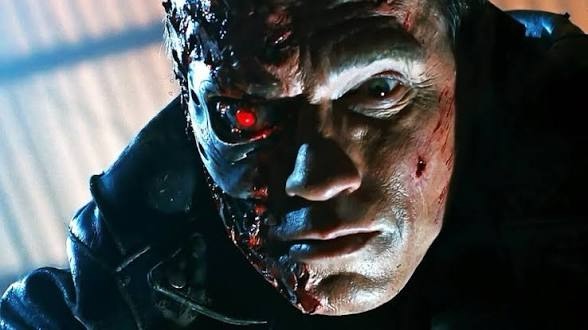
I noted that music is being made by more artists. It’s easier to make, produce and release. Well now, it’s almost too easy, thanks to AI. In fact, you don’t have to even be bam musician to be a “musician.” People who have never touched an instrument can have a song “produced,” by AI software and call it their own. They can record themselves singing a melody and let the software do the rest. If they have an idea of a storyline but they’re not able to articulate how to transition to song lyrics, AI can fix it for them.
An artist doesn’t even have to physically exist in the world to release music. The artist themselves can be generated by AI. Last month, we watched as Breaking Rust topped Billboard’s digital sales chart for country music with the song, Walk my Walk.
The Fatal Funnel
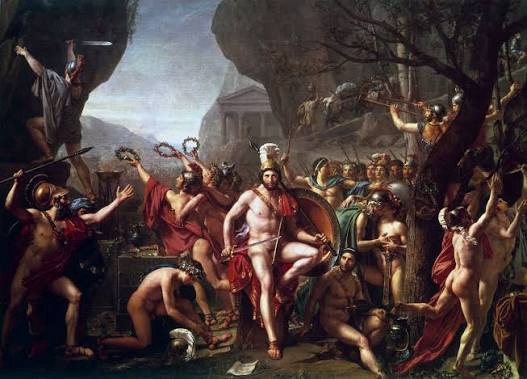
Soldiers are familiar with the term, “fatal funnel.” Sometimes, it’s also referred to as “bottlenecking.” It’s a tactical advantage an army would want the opportunity to take if they were severely outnumbered. If there are 100,000 troops marching against an army of 10,000, leading the larger army into a bottleneck takes the numbers advantage away from the larger army, eliminating their ability to flank, or surround the smaller army.
Spotify, Apple, and Amazon are letting independent artists flood towards a bottleneck and now, AI artists are joining our army. The thing to know about a Fatal Funnel is, it earns the name because mass casualties are to be expected.
I’m not sure Breaking Rust will feel the squeeze of the Fatal Funnel. On one hand, they have already found success with a number one single in Walk my Walk, ironically a thing they have never done or will ever be able to do. On the other hand, if Breaking Rust were to be one of the fatalities of the Fatal Funnel, they wouldn’t feel the hit and there would be a thousand AI artists to replace them with the snap of a finger.
Breaking Rust doesn’t have bills to pay, they don’t have a family to support, they don’t have to worry about getting the flu. They don’t have to deliberate on where they will find a studio guitar player or how long a session will take. They don’t get a flat tire on the way to work, they don’t count their calories, and they don’t worry every time they look in the mirror if they’re getting too old.
Breaking Rust, like the millions of independent artists who live and breathe in this world, are expendable to corporate elites. The only difference is, they’re not worried about it, because they haven’t walked our walk.
In an effort to declare themselves rulers of the world, corporate elites may have finally found a way to destroy fine arts.
And what’s worse, as the general consumer rushes to widen the gaping wound, they don’t seem to notice. Or care.




 Fifteen Minutes of Fame Music Entertainment
Leave a reply to Marc Schuster Cancel reply