
Originally Published on May 29th, 2026
Sometimes I wonder if it will actually be a meteor or a nuclear war that kills us off or will it be some monotonous constant that drives mankind to a state of incapable existence. When my high school friend, Jeff Bollig, was hospitalized at 17 for having a stomach ulcer from drinking too much orange juice, I thought, “It’s true. Too much of anything will actually kill you.”
We innovate and create. We innovate and create. We innovate and create. Rinse, wash, repeat. We get so caught up on what we can and cannot do that we never consider whether or not we should. For instance, there are countless inventions already in existence already capable of driving mankind to extinction.
It’s ironic what we actually concern ourselves with. We all want to be noticed. I often wonder what percentage of people think at some point or another, “what can I do to make a post go viral?” The internet is oversaturated with shock value and copycat culture. In an effort to claim individuality, we have become more conformed than ever. We are so influenced that we don’t even call “influencers” that anymore. We are “content creators.” We are a species that could actually eliminate our ability to evolve to our obsession to participate in our innovation.
“How does this relate in any way to music?”
These patterns are also in music that is being marketed today. There is so much talent in the world and yet the industry itself seems hell-bent on recreating some of the most basic trends in an effort to turn the art form of music composition into click bait. The industry doesn’t want us to listen to albums. They don’t even want us listening to entire songs. They want us scrolling. They want us feeding algorithms.
We innovate. We create. We are becoming obsolete. We are becoming expendable. Extinction imminent.
There is an uprising of musicians who see the writing on the wall. We fight AI. We fight Spotify. We fight content creating. We fight Ticketmaster. We are trying to take a stance but the machine that is in motion is so big that we all risk being left in the lurch if we try to resist. Yet we still rely heavily on these devices we resist in an effort to cling to relevance.
Some artists are more guilty of this than others. Then, there are artists like Liz Bills.
Liz exhibits no ambitious notions of blowing up, or being noticed. She creates content and she uses Spotify but she takes power from these “conformities” by operating under her own terms, not society’s. She loves music and she loves to sing because she finds joy in it. She is moved by the expression of it. She doesn’t simply ride her natural ability, she practices, she exercises, and she works to enhance her talents. She even occasionally posts about vocal warmups and exercises on her YouTube channel.
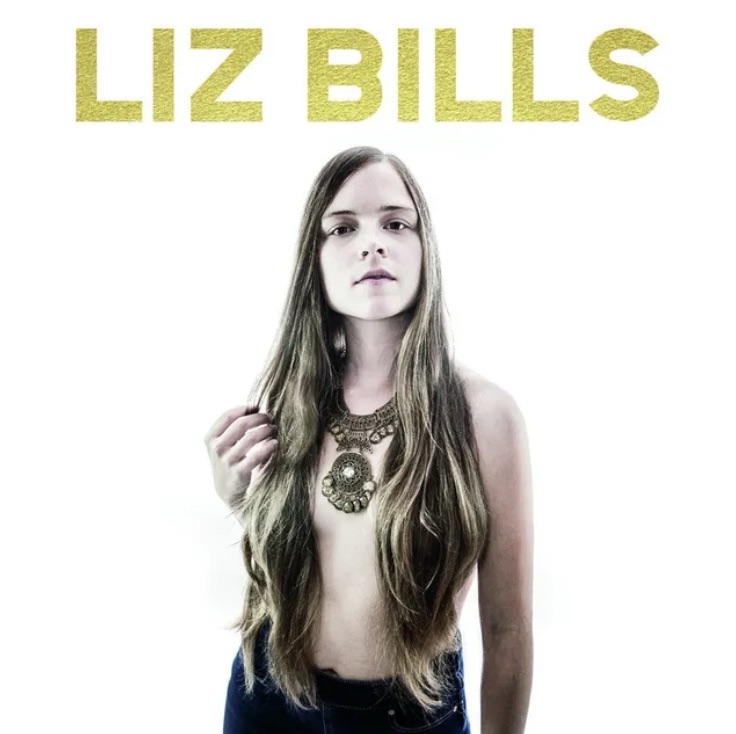
Liz Bills, originally from Boston, has accomplished so much as an independent artist. Making a name for herself in the rock band Analog Heart, she then created her own roots project, Liz Bills & The Change. Bills was nominated for singer/songwriter of the year three year in a row for the Boston Music Awards from 2020 to 2022. She won best pop act in 2021 and roots act in 2019, and was nominated for best songwriter in 2023 for the New England Music Awards. She was a 2013 contestant on the popular television series, American Idol, though she was eliminated just before the finalists were selected. She has opened for major acts, including Bon Jovi.
In 2017, she released an EP, Liz Bills, a 4-song (mostly) acoustic work that includes the sensational song, Werewolf. In 2021, Liz Bills & The Change released their self-titled debut album, Liz Bills & The Change. This incredible album featured a number of selections that truly showcased the versatile talent possessed by Bills.
Bills has stated via her website that Liz Bills & The Change are working on a follow-up to their 2021 debut that is expected to release in 2026.
Change
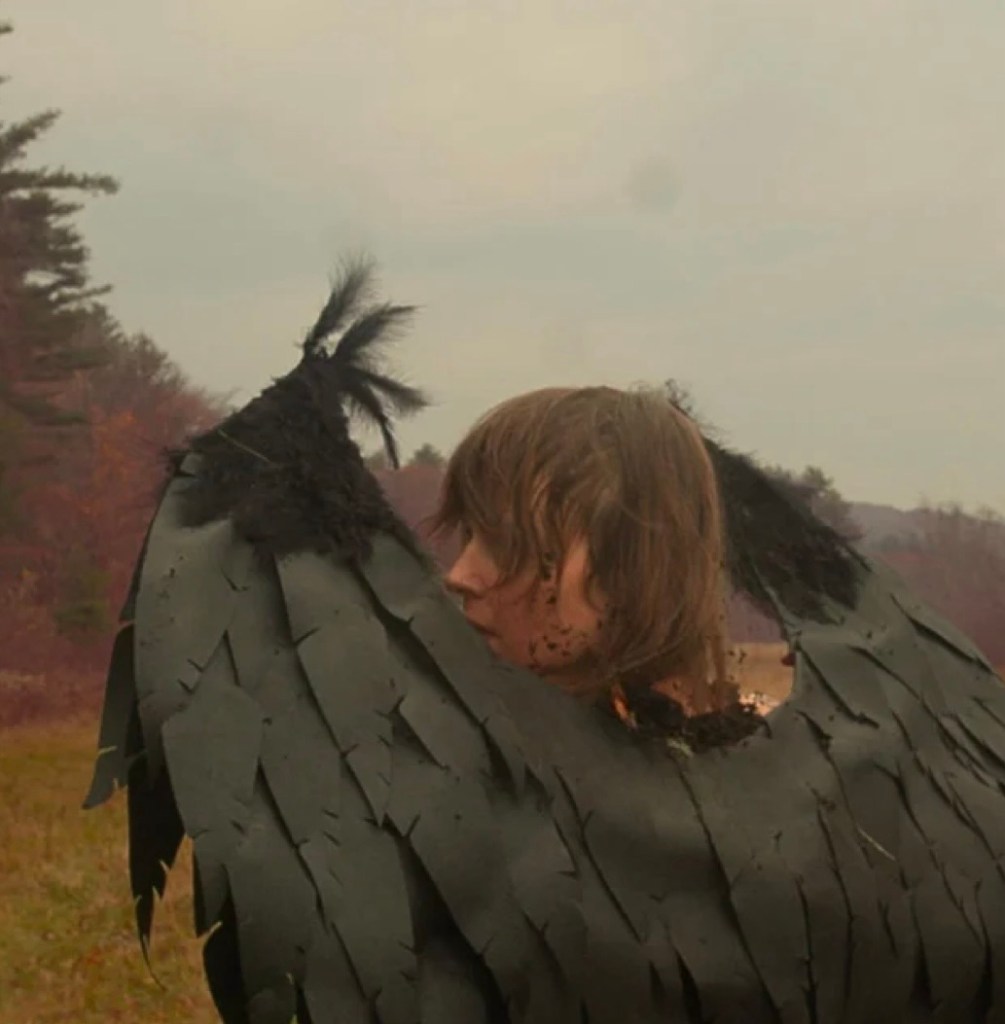
Change is a 9- song acoustic album by Liz Bills. It runs at 36 minutes and features vocal performances by Bills, accompanied by acoustic guitar and piano. It features 4 singles released prior to the album release; I’m Scared (to Fall in Love Again), Float On, Playin’ With Fire, and the title track, Change. It released May 27th, independently. Bills also released two music videos for I’m Scared (to Fall in Love Again) and Playin’ With Fire.
The first thing I noticed when I discovered Bills over a year ago is her physical talent as a vocalist. She is an extraordinarily ornamented artist who exhibits incredible control over her ability to do so much. I came across a clip of I’m Scared, by chance, on TikTok, and immediately followed her on Spotify and Bandcamp.
Change has everything that’s to love about Liz Bills’ music. Highlighted by her sensational vocal performances throughout the entire album, they are presented in an incredibly intimate atmosphere through the acoustic setting. It’s important to note that, because of how good of a vocalist she is, her talents as a lyricist can be sometimes overlooked. I highly recommend not doing that.
Bills is an unconventionally talented storyteller. She doesn’t reach for trendy catchphrases, she doesn’t try to be to clever with how she spins a lyric and she doesn’t spend a lot of energy in trying to “turn a phrase,” as a tactic to catch an audience’s attention. Either she ignores the temptation to sound “gimick-y,” or she altogether does not possess the instinct to be that way. When I listen to her lyrics, I think she is simply speaking her truth and unloading the thoughts that are on her mind. She doesn’t even necessarily worry about whether or not things rhyme. She focuses on the personalization of the story. She focuses on keeping it real and being genuine to herself. This creates some absolutely breathtaking moments. She doesn’t shy away from any topic, no matter how personal. She doesn’t care whether or not she’s judged. The songwriting is so vulnerable, it’s as if she’s voluntarily taken off all of her clothing and locked herself in a pillory, exposing herself entirely to her audience.
This intimacy is consistent throughout the entire album. She addresses her mother getting sick and passing away, a recurring theme throughout, as this album was heavily influenced on her coming to terms with that grief. She talks about love in a way that indicates chasing a relationship, even if she knows it is messy, then talks about the breakup in a completely humble way: how “she was left.” She talks about “getting high and watching Netflix,” as if it is routine and natural, not in a way to be “cool” or topical. She talks about her brother “getting out,” in a reference to something that sounds like it could be prison, it could be rehab, or it could be the military. She talks about motherhood being a sort of saving grace for her. She talks about the feeling of wearing down at 36 years of age, and how she sometimes wants to cheat on her diet and eat a cheeseburger. She does this in a way that is so real. No subject is off the table. She is unafraid, she isn’t ashamed, and she is gloriously human.
I think this has more to do with who Liz Bills is as a person. The lyrical vulnerability. The personality that is attributed in her vocal work. It can also be seen in videos of her live performance, as well as promotional videos posted on her social media. The way that she looks right through the camera into the listeners’ eyes. It manifests her presence to make it feel as if she were in the same room as her audience. Or make an entire crowd disappear so that it is just her and the one she is singing to. She doesn’t just sing, she performs. She feels on an unusually deep level. It provides comfort. It’s like she acknowledges that the subject matter can be complex so she offers her hand to the listener in an effort to guide them through it.
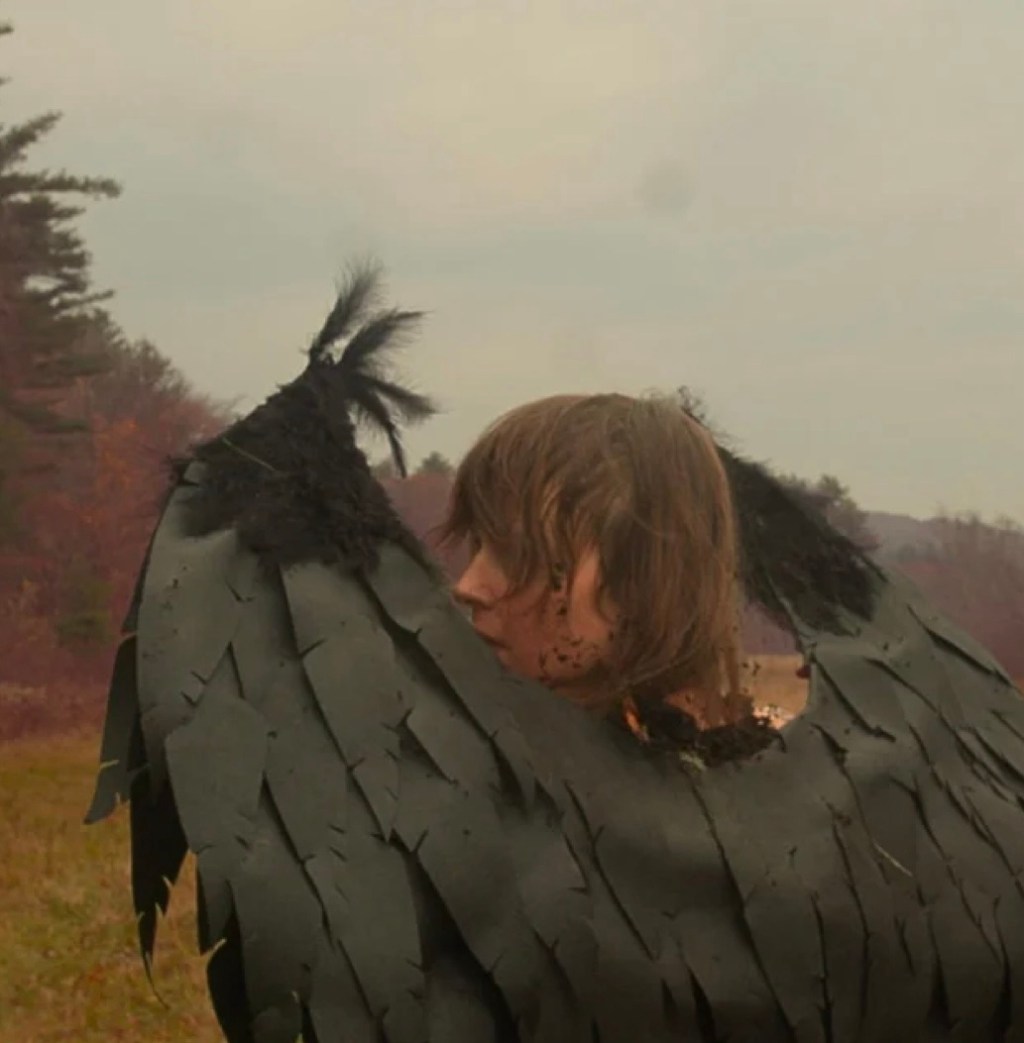
Liz Bills isn’t the traditional recording artist. She is sings and plays, but in a way that feels natural to her, not in a way that means to be technically right all of the time. She is an eccentric, but in a way that might be a little weird; she doesn’t care. It is authentically her. That’s why she might perform in a pair of wings that she hand-crafted herself. Or paint her face with glitter. She is a minimalist. She is a little bit of a hippy. She isn’t just an artist. She is art. I’ve seen one other person as committed to connecting her audience to her music to such a degree before. Though the music is very different, this is a form of expression I’ve only also seen in Lady Gaga.
Liz Bill’s latest effort, Change, is a sensational release. It tells a deeply personal story, it is emotional, and it is unquestionably intimate. Listeners will appreciate her superior vocal performance, the minimalism of the acoustic performance, and her direct and thoughtful songwriting.
Go Press Play



Leave a Reply